

Conviction& Condemnation
One calls you home. The other tells you to stay away. Learn to tell the difference, and stop carrying what Jesus already carried.
Swipe the study
9 slides · tap the arrows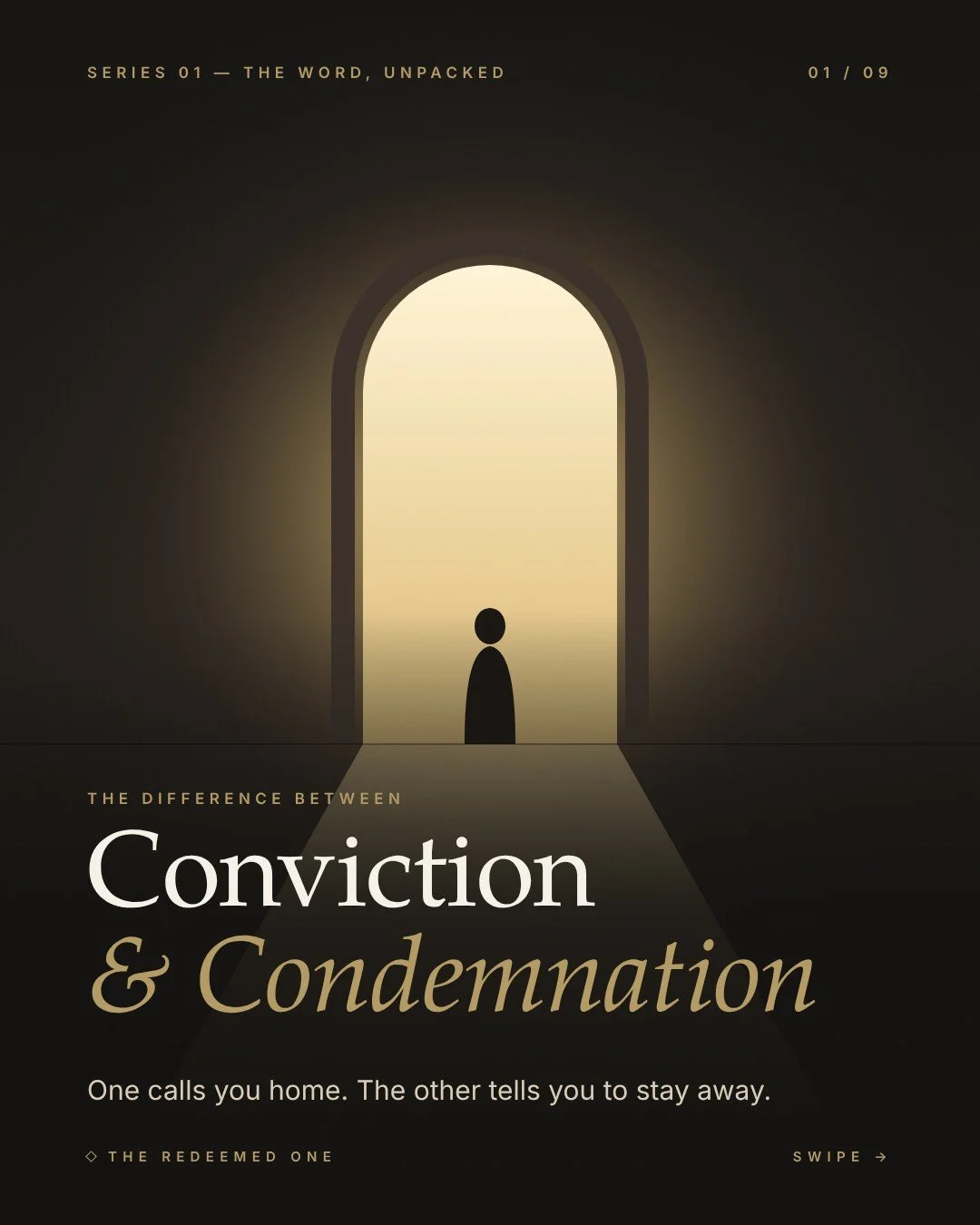
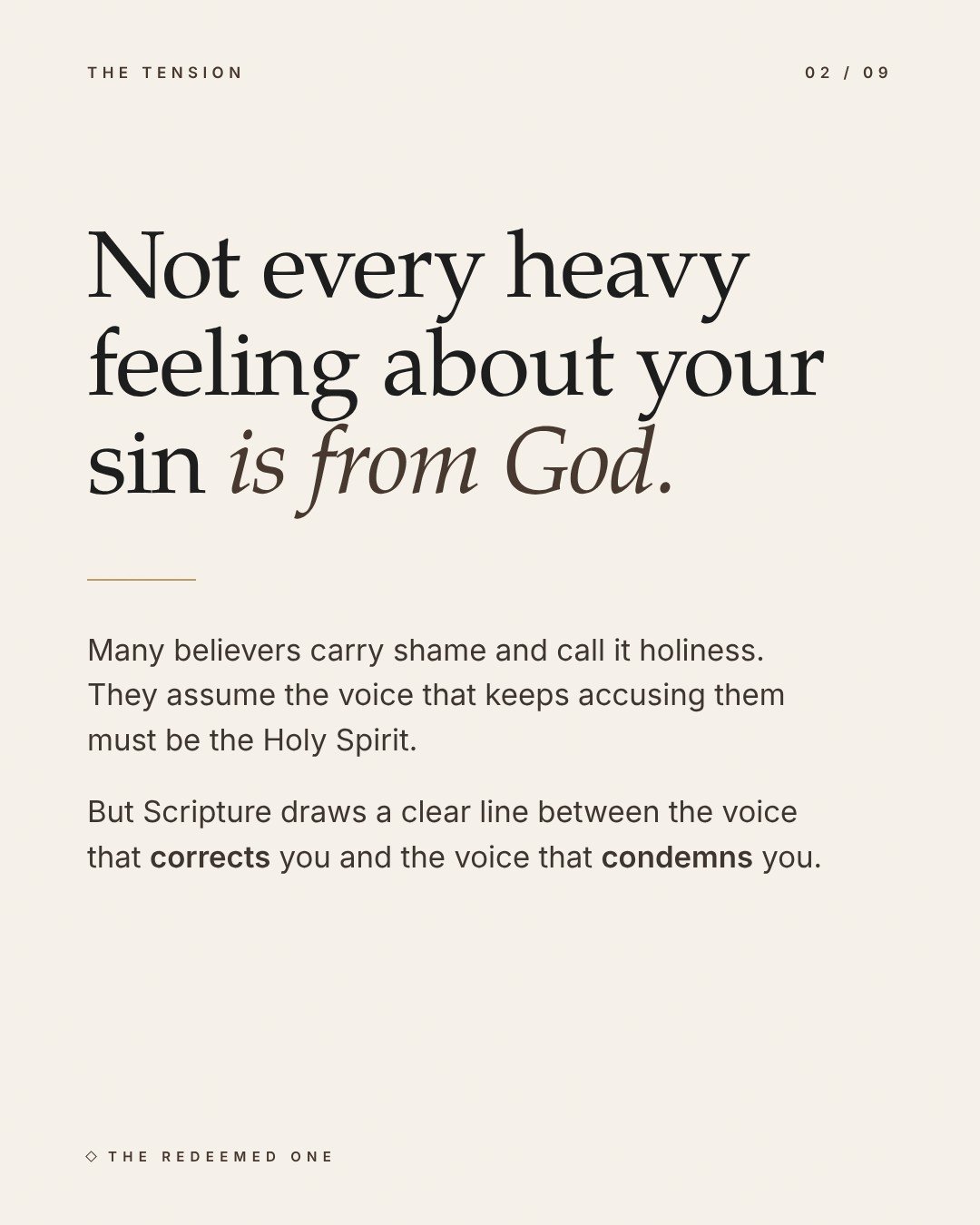
Not every heavy feeling about your sin is from God
Many believers carry shame and call it holiness. They assume the voice that keeps accusing them must be the Holy Spirit. But Scripture draws a clear line between the voice that corrects you and the voice that condemns you.
What the Bible says
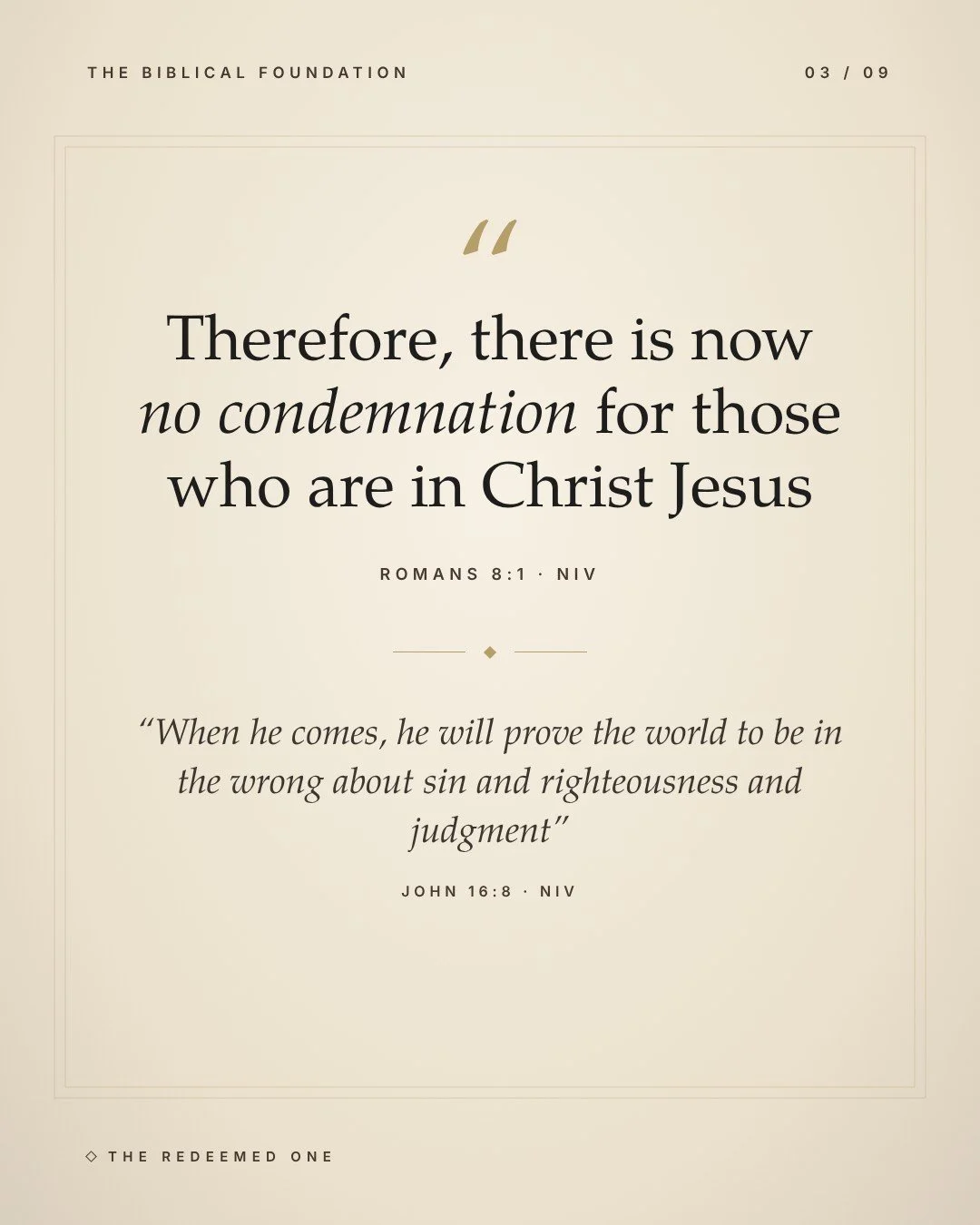
Therefore, there is now no condemnation for those who are in Christ JesusRomans 8:1 · NIV
Paul writes this right after describing his own struggle with sin in Romans 7. For those who are in Christ, the verdict is settled. That doesn’t mean God stops correcting His children. Jesus said the Holy Spirit would keep doing that work:
When he comes, he will prove the world to be in the wrong about sin and righteousness and judgmentJohn 16:8 · NIV
So the Spirit still convicts. What He never does is reopen a case Jesus already closed.
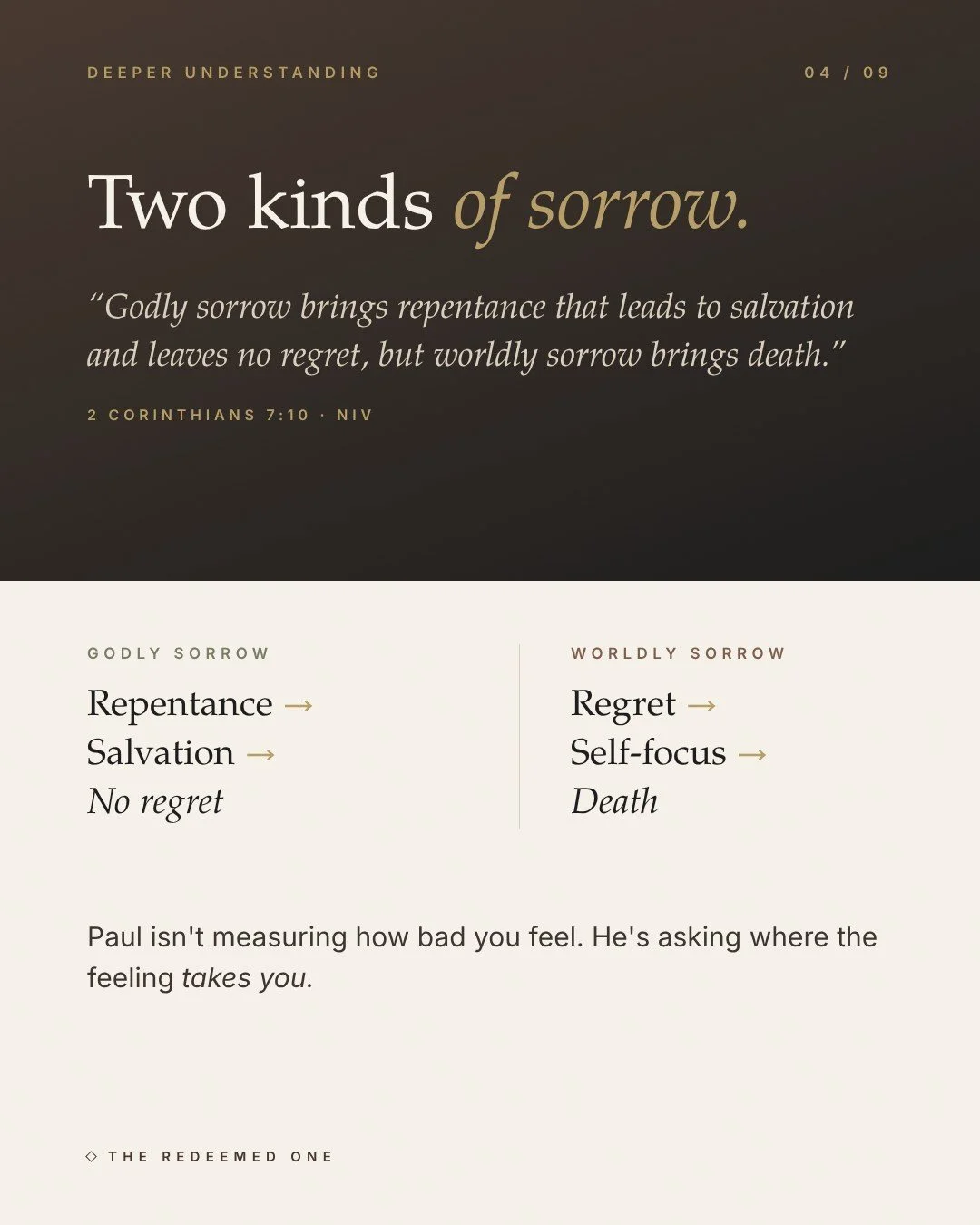
Two kinds of sorrow
Godly sorrow brings repentance that leads to salvation and leaves no regret, but worldly sorrow brings death.2 Corinthians 7:10 · NIV
- Repentance
- Salvation
- No regret
- Regret
- Self-focus
- Death
Paul isn’t measuring how bad you feel. He’s asking where the feeling takes you. Godly sorrow leads to repentance, salvation and a life without regret. Worldly sorrow turns inward, feeds on itself and leads to death.
How to tell the difference
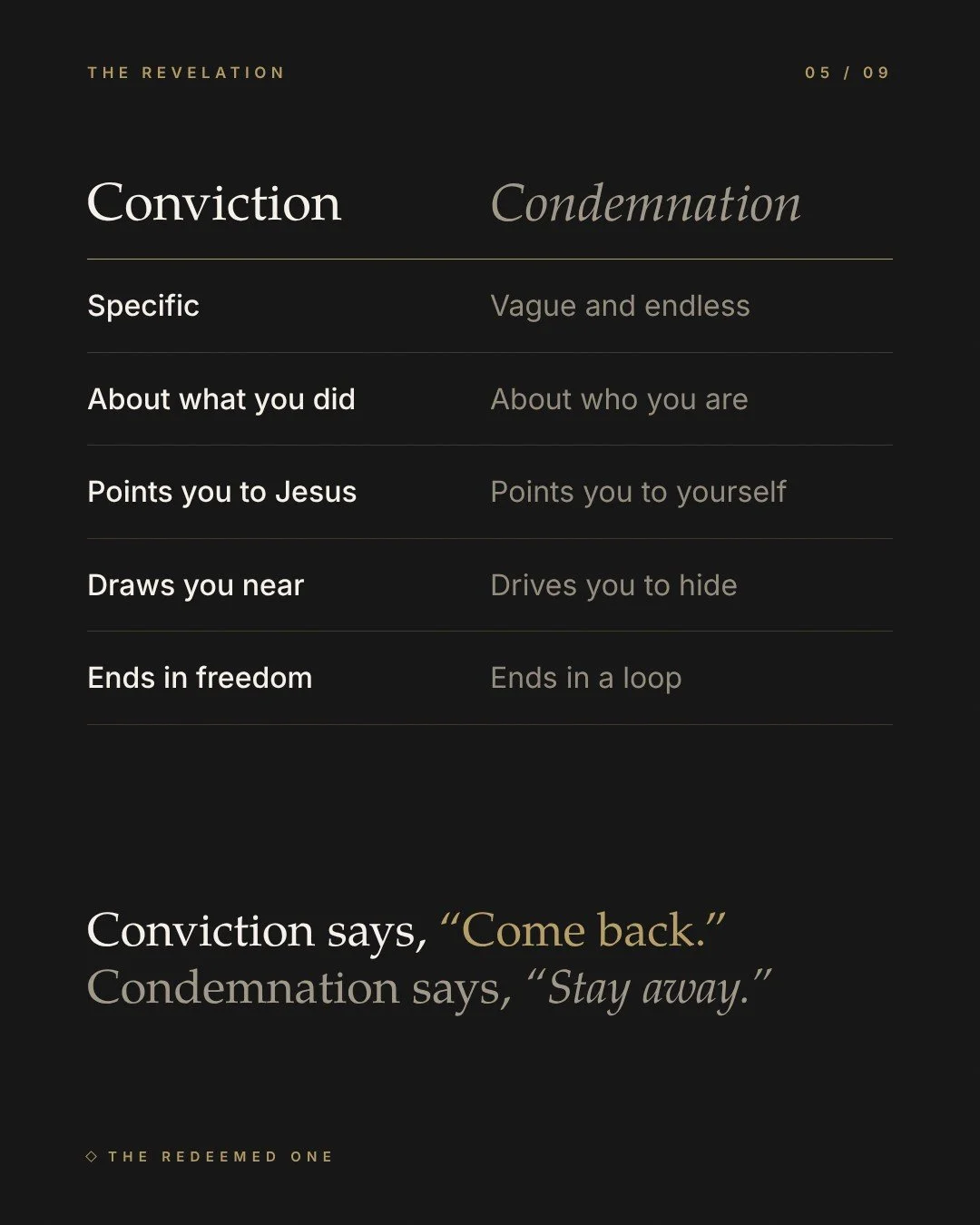
Conviction says, “Come back.”Condemnation says, “Stay away.”
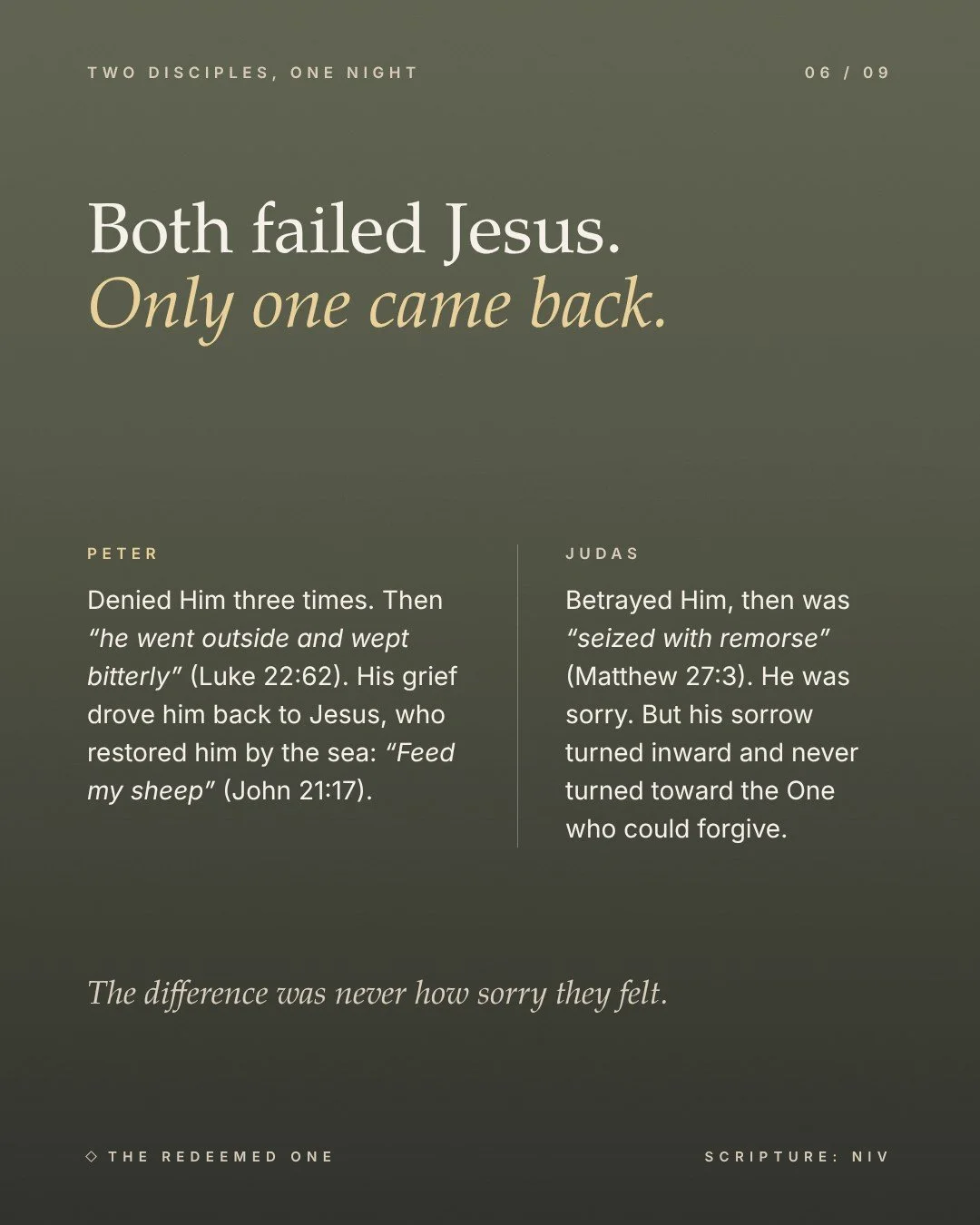
Both failed Jesus. Only one came back.
Peter
He denied Jesus three times. When he realized what he had done, “he went outside and wept bitterly” (Luke 22:62, NIV). His grief drove him back to Jesus, who restored him by the Sea of Galilee with a new calling: “Feed my sheep” (John 21:17, NIV).
Judas
He betrayed Jesus, then was “seized with remorse” (Matthew 27:3, NIV). He was sorry. But his sorrow turned inward and never turned toward the One who could forgive.
The difference was never how sorry they felt.
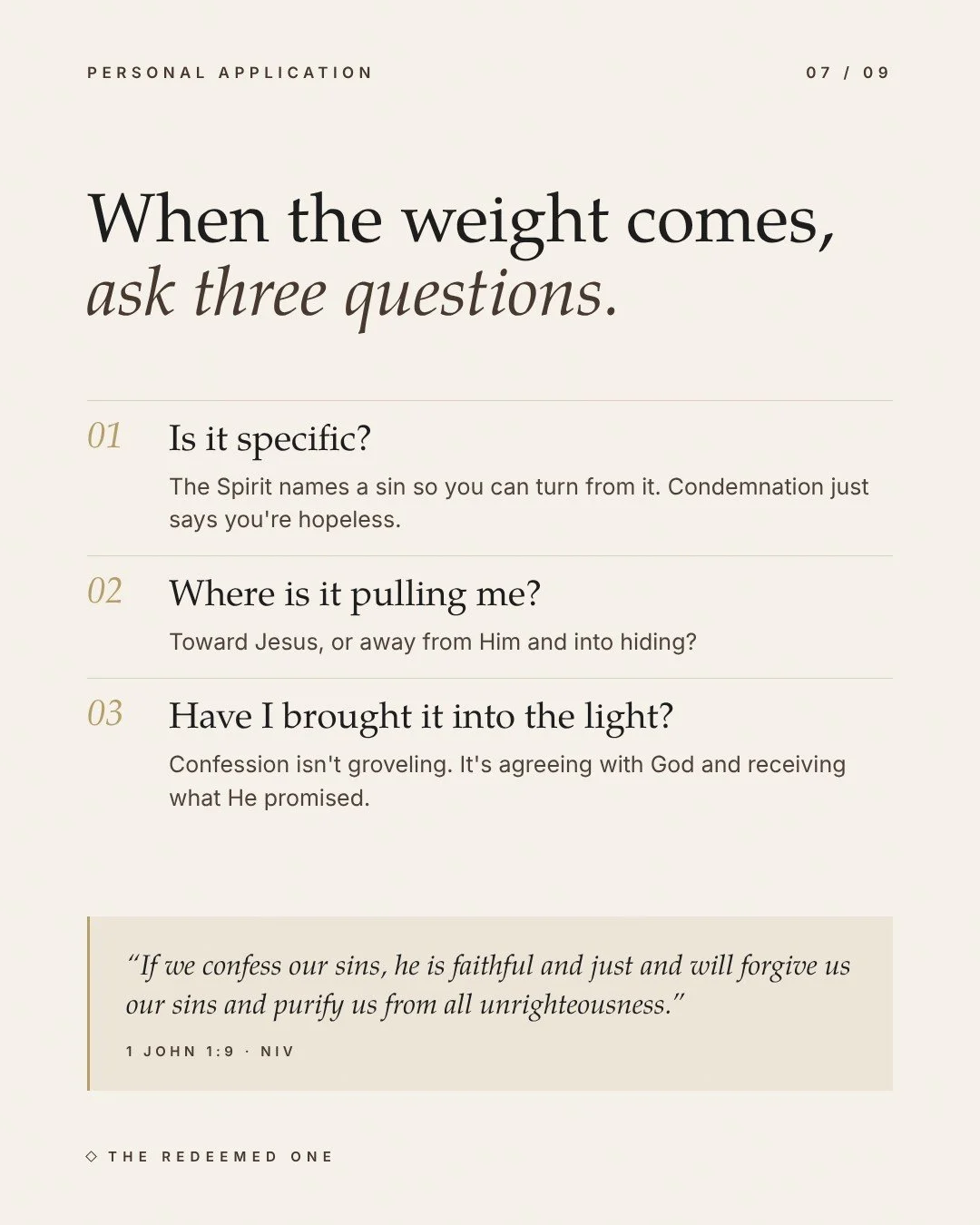
When the weight comes, ask three questions
- Is it specific?The Spirit names a sin so you can turn from it. Condemnation just says you’re hopeless.
- Where is it pulling me?Toward Jesus, or away from Him and into hiding?
- Have I brought it into the light?Confession isn’t groveling. It’s agreeing with God and receiving what He promised.
If we confess our sins, he is faithful and just and will forgive us our sins and purify us from all unrighteousness.1 John 1:9 · NIV
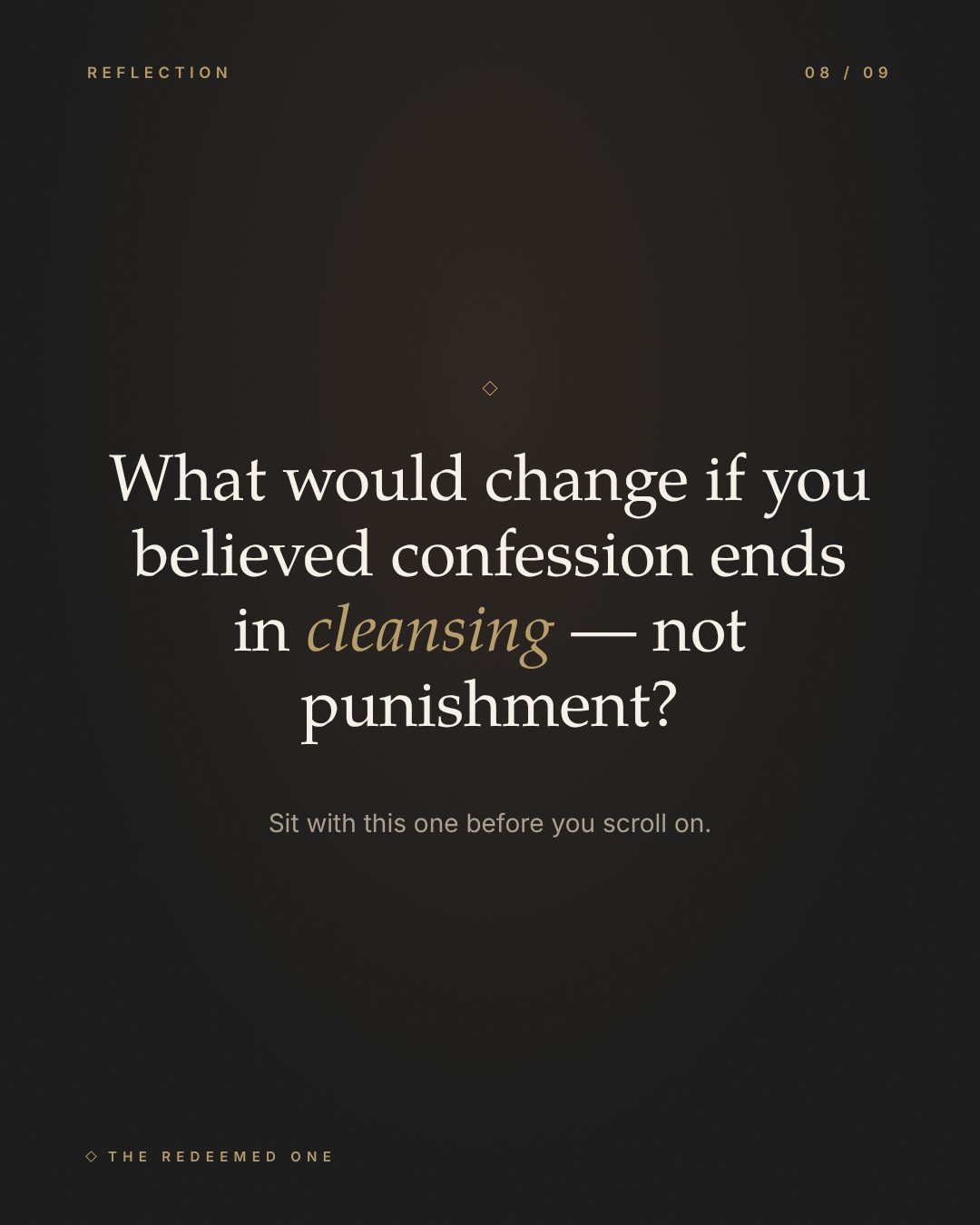
What would change if you believed confession ends in cleansing, not punishment?
You are not who your shame says you are. Let conviction lead you to Jesus, and leave condemnation where He already left it: at the cross.
Go deeper in the Word
Save the slides for your next quiet moment, then keep studying.
Scripture quotations taken from The Holy Bible, New International Version® NIV®. Copyright © 1973, 1978, 1984, 2011 by Biblica, Inc.™ Used by permission. All rights reserved worldwide.